For Parents and Teachers
How to read Catalyst City with kids, what each chapter teaches, and simple ways to bring NDARI into a home or classroom.
Why Catalyst City
Kids learn what a community can be from the stories they hear. Catalyst City shows a place where breakfast is free, gardens feed everyone, and neighbors help without being asked. It does not lecture. It invites kids to notice, to dream, and to try one small kind act at a time.
A short history to share
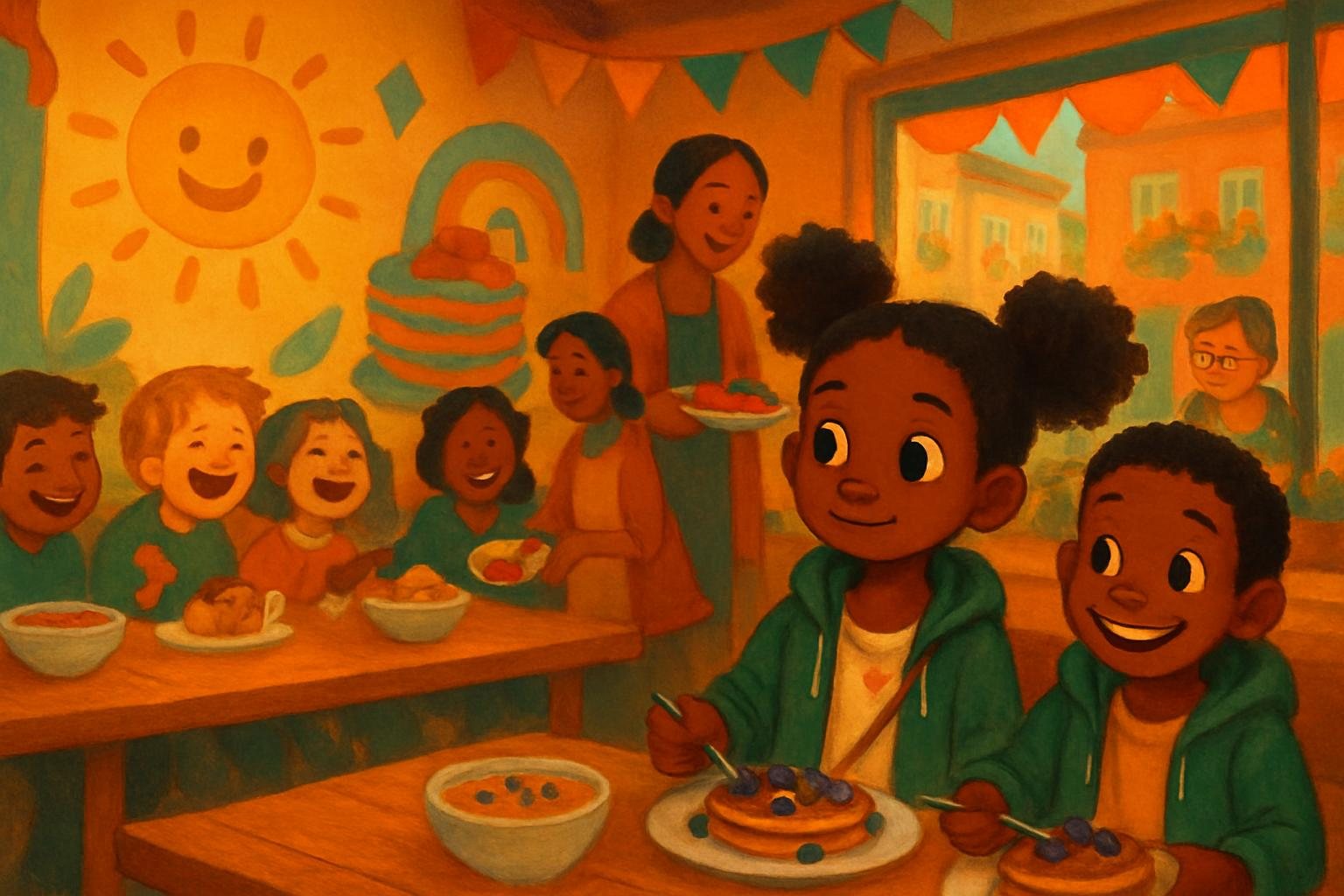
In Chapter One, a grown-up tells Maya that “by 1969 a famous group started free breakfast programs so kids wouldn’t be hungry at school.” That group was the Black Panther Party, whose Free Breakfast for Children Program began in Oakland, California in 1969 and served free breakfasts to thousands of children in cities across the country. Today, the federal School Breakfast Program serves millions of students every school day.
Kid-friendly version
“A long time ago, some people noticed kids were coming to school hungry. So they started making free breakfast for them, every morning, in their own neighborhoods. Lots of schools still serve breakfast today.”
Gardens give us fresh food and help neighbors become friends.Ms. T, The Garden of Sharing
Classroom activities
The helper notes board
Copy the library board from Chapter Three. Kids write one helpful thing they did (“I helped sweep,” “I shared my lunch”) and add a star sticker. Read a few aloud each Friday.
A class Garden of Sharing
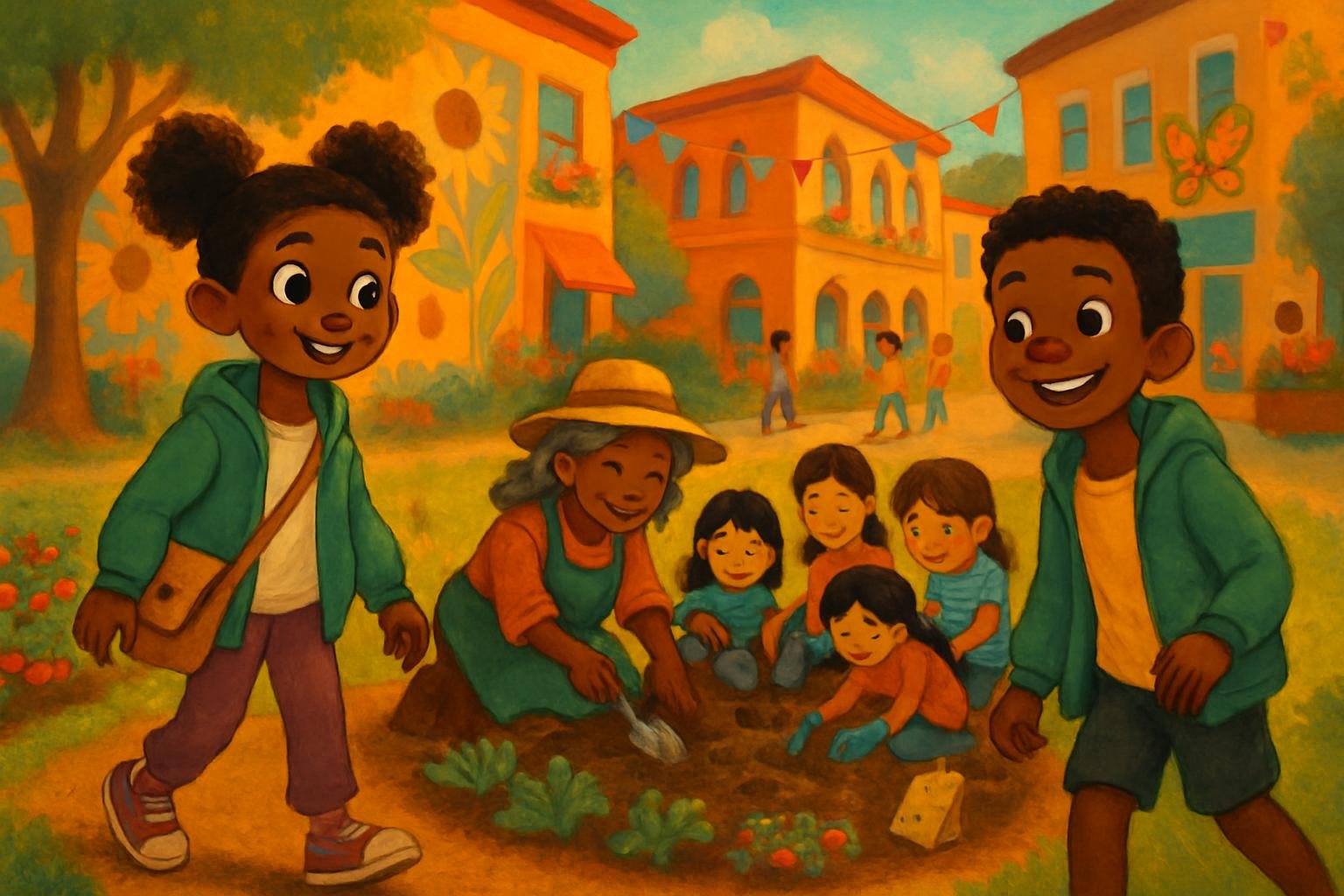
Plant carrots, sunflowers and spinach in cups or a small bed. Use the planting chart and decide together who the class will share the harvest with.
The fair share snack
Chapter Four is a gentle way to talk about greed. Share one snack among the group and ask: how did we make it fair? How did it feel?
Discussion questions
The Book One discussion guide has questions for every chapter, written for ages 4 to 9.
Teaching with Catalyst City?
Join the list for new chapter guides and classroom activities as each book comes out.